What to Do After a Car Accident in BC
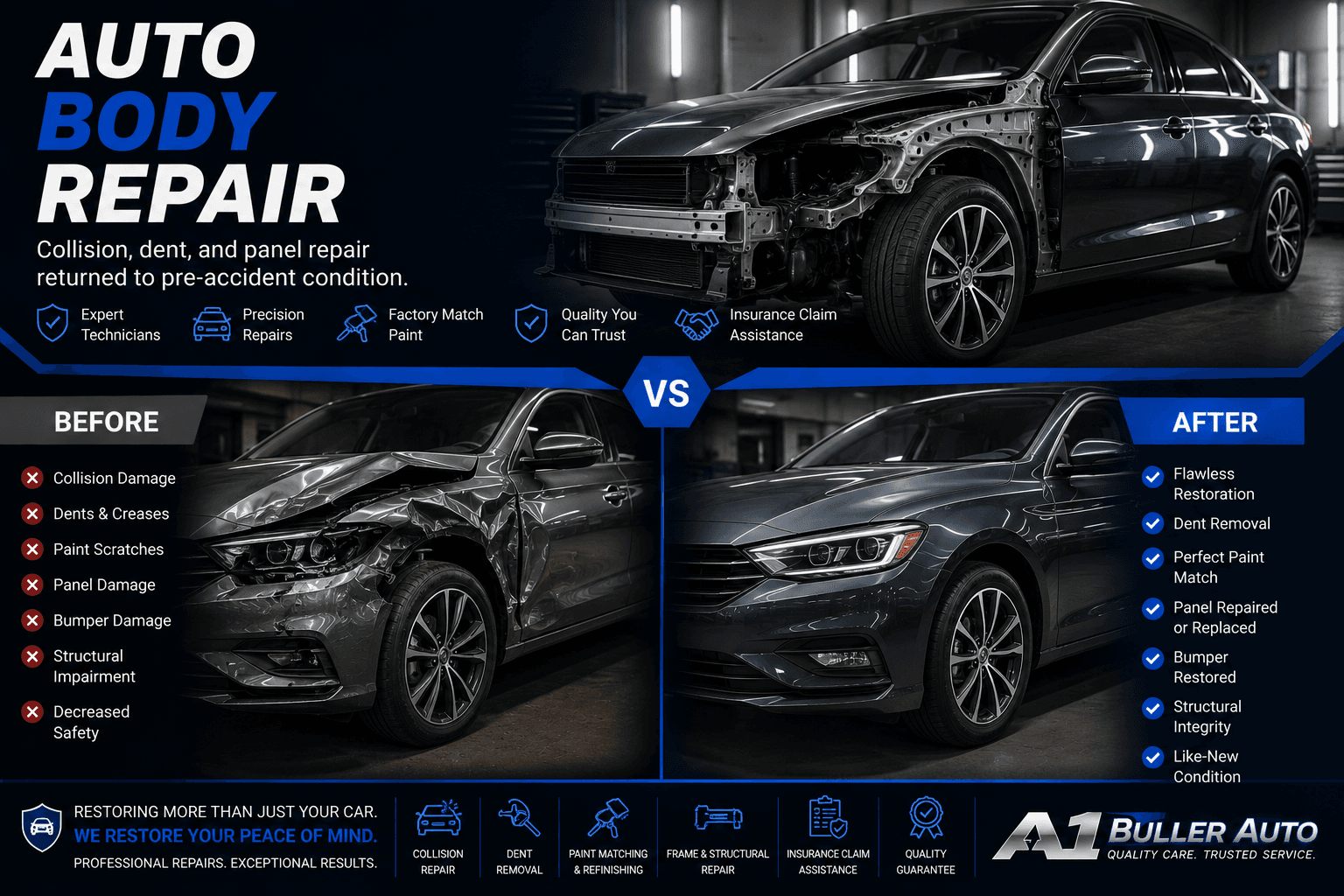
A collision is stressful, even when the damage looks minor. A calm, documented response protects the people involved and gives the insurer and repair facility better information. Use this checklist as general guidance, then follow the current instructions from emergency services and your insurer.
1. Put safety first
Check for injuries and call 911 when anyone may need medical help, the road is unsafe, or emergency assistance is required. If it is safe and permitted, move vehicles out of active traffic. Turn on hazard lights and avoid standing between vehicles or beside fast-moving traffic.
2. Record the scene and vehicle damage
Take wide photos showing the position of the vehicles and closer photos of each damaged area. Capture licence plates, road conditions, signs, lane markings, and any debris that helps explain what happened. Exchange the required driver, vehicle, and insurance information. Write down the time, location, direction of travel, and a short factual description while it is fresh.
3. Report the claim through the correct channel
Report the collision to your insurer and keep the claim number. For an ICBC claim, use the current reporting options and instructions published by ICBC Claims. Requirements can vary with the circumstances, so rely on the insurer for claim-specific direction.
4. Avoid judging damage from appearance alone
A scuffed bumper cover can hide absorber, reinforcement, sensor, or mounting damage. A wheel impact can affect alignment or suspension. Uneven panel gaps can indicate movement beyond the visible dent. Do not assume the vehicle is safe to drive when warning lights, fluid leaks, rubbing tires, loose panels, damaged lamps, steering changes, or unusual noises are present.
5. Arrange a documented repair assessment
Provide the repair shop with the claim number, vehicle information, photos, and a description of any changes you noticed while driving. The first estimate may cover visible damage. Additional damage can become apparent after cleaning, measuring, scanning, or disassembly, and the repair plan may be updated accordingly.
6. Ask how the repair will be verified
A useful repair conversation covers the required parts, manufacturer procedures, structural measurements where applicable, refinishing, calibration needs, estimated timing, and how the completed work will be checked. Keep copies of the estimate and repair documents for your records.
Quick collision checklist
- Check for injuries and make the scene safe.
- Photograph the scene and every damaged area.
- Exchange and record the required information.
- Report the claim and save the claim number.
- Stop driving if the vehicle may be unsafe.
- Arrange a professional inspection and documented repair plan.