Paint Matching After Body Repair in Burnaby: A Clear Guide
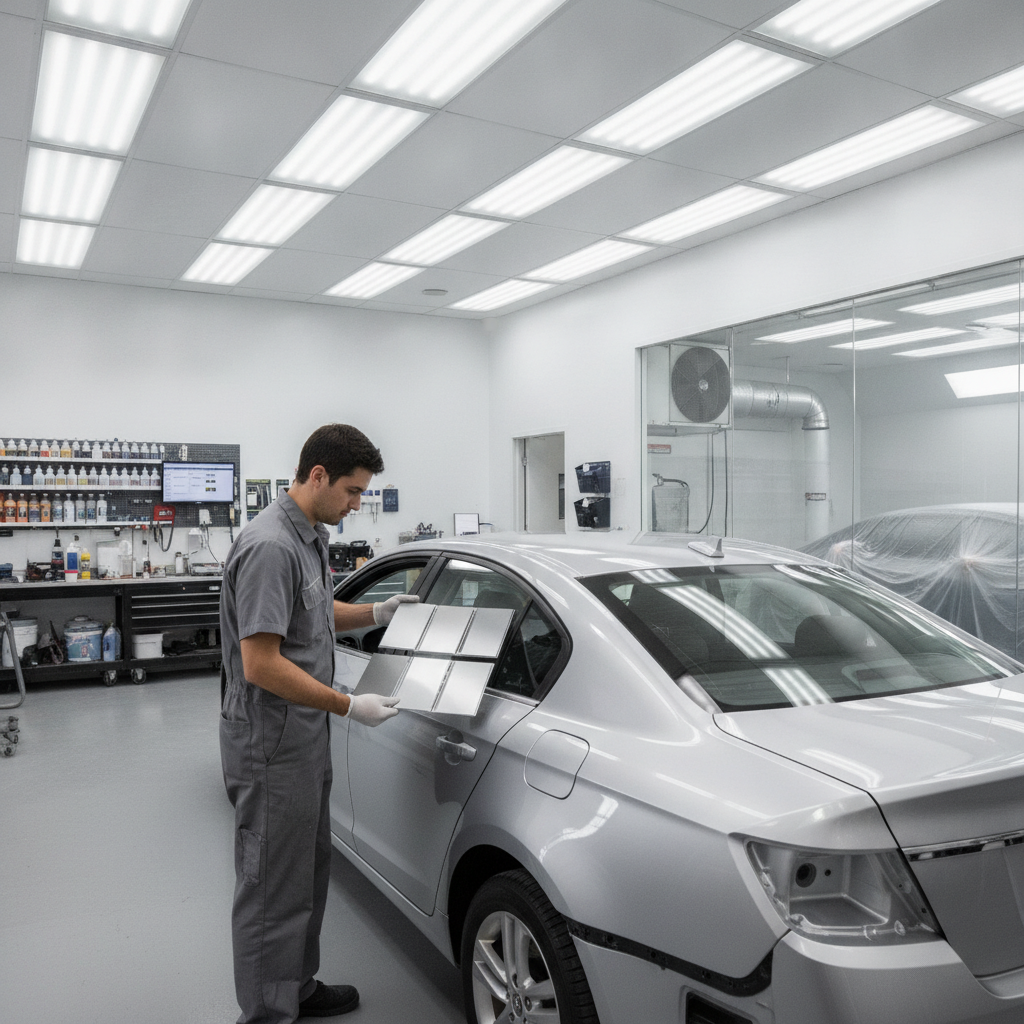
Paint matching after body repair is the professional process of restoring a repaired panel’s color and texture so it visually disappears next to surrounding panels. The work goes beyond a factory code: we measure your car’s current finish, mix a variant, and blend adjacent areas, then verify the result in sun and shade around Burnaby.
By A1 Buller Auto Collision | Last updated: 2026-07-13
| ICBC Platinum Partner | Yes |
|---|---|
| Free estimates | Yes — phone scheduling available |
| Core services | Collision/body repair, paint matching, A/C service, wheel alignment, tire and brake replacement |
| Service area | Burnaby |
| Availability | Mon–Sat; Sunday by appointment |
Overview
A color code alone rarely delivers an invisible repair. The right approach reads your OEM code, scans your current paint with a spectrophotometer, mixes the best variant in a professional system, blends adjacent panels, and checks the result outside. That’s how a repair stays hidden in real Burnaby light.
Burnaby pickup tip
We like to roll vehicles outside near mid‑day. The open sky around Royal Oak Station shifts fast, so we check under direct sun and open shade. If you’re stopping by after the Nikkei National Museum & Cultural Centre, we can still step outside with portable LEDs to mimic daylight.
Why Paint Rarely Matches Perfectly Right Off the Bat
A factory color code is a baseline; your actual paint has aged, oxidized, and faded. Plastics and metals reflect differently, and lighting changes perceived hue. Matching requires a measured variant and controlled blending so the transition is invisible under multiple light sources.
Two cars with the same code can look different. Many popular silvers and whites ship with double‑digit variants from the factory. Add 3–7 years of UV exposure, frequent rain, and road spray, and the color you see today is a drifted version of day‑one paint. That’s normal—and why a straight code spray often looks “close but off.”
Material matters too. A flexible plastic bumper scatters metallic “flop” differently than a steel fender. Even if the hue is right, gloss and texture can give the repair away. That’s why pros match color and texture together.
The 5 Real Factors That Cause Paint Mismatch After Body Repair
Mismatch usually comes from skipping variant selection, poor surface prep, no blend into neighbors, rushing flash or bake times, or judging color only under one light. Control these five and you’ll get a seamless repair in sun and shade.
1) Variant selection and mixing
Most paint systems (PPG Envirobase, BASF Glasurit 90‑Line, Axalta Cromax Pro, Sikkens Autowave) list several variants per code. Choosing the wrong one shows up instantly outside. We spray test cards and compare at 0°, 45°, and 90° viewing angles before committing.
- Typical blend distance: 6–12 inches into the next panel, ending at a body line.
- Metallics and pearls almost always require a blend for a true visual match.
2) Spectrophotometer reading
A spectro scan captures L*a*b* color values from your actual panel and suggests close mix formulas. We scan close to the repair area and average several reads to reduce localized fade or polish effects. It speeds the path to the right variant.
3) Surface prep and texture
Contamination or uneven feather‑edging changes how basecoat lays. We clean, block, and prime to a uniform surface, then finish‑sand so the new texture mirrors OEM orange peel.
- Typical waterborne basecoat flash: 5–10 minutes at ~70°F (21°C), per TDS.
- Common clearcoat bake: 140°F (60°C) for ~20–30 minutes; follow product spec.
4) Blending strategy
Color is tapered into the neighbor so the eye never crosses a hard edge. We aim blends at natural breaks (door edges, quarter panel lines) and clear full panels to equalize gloss. Panel‑only repairs on solid colors are possible, but we’ll advise case‑by‑case.
5) Lighting and metamerism
A match can look perfect under LEDs yet drift in open shade. We cross‑check in shop LEDs, outdoor shade, and direct sun when available. This avoids metamerism—colors that match in one light but not another.
How Paint Matching After Body Repair Should Be Done (What A1 Buller Does)
Our method pairs measurement with craft: read the code, scan the live panel, mix and spray test cards, refine gun setup, blend 6–12 inches into neighbors, then validate outside. Certified technicians follow TDS flash and bake windows so color and texture settle correctly.
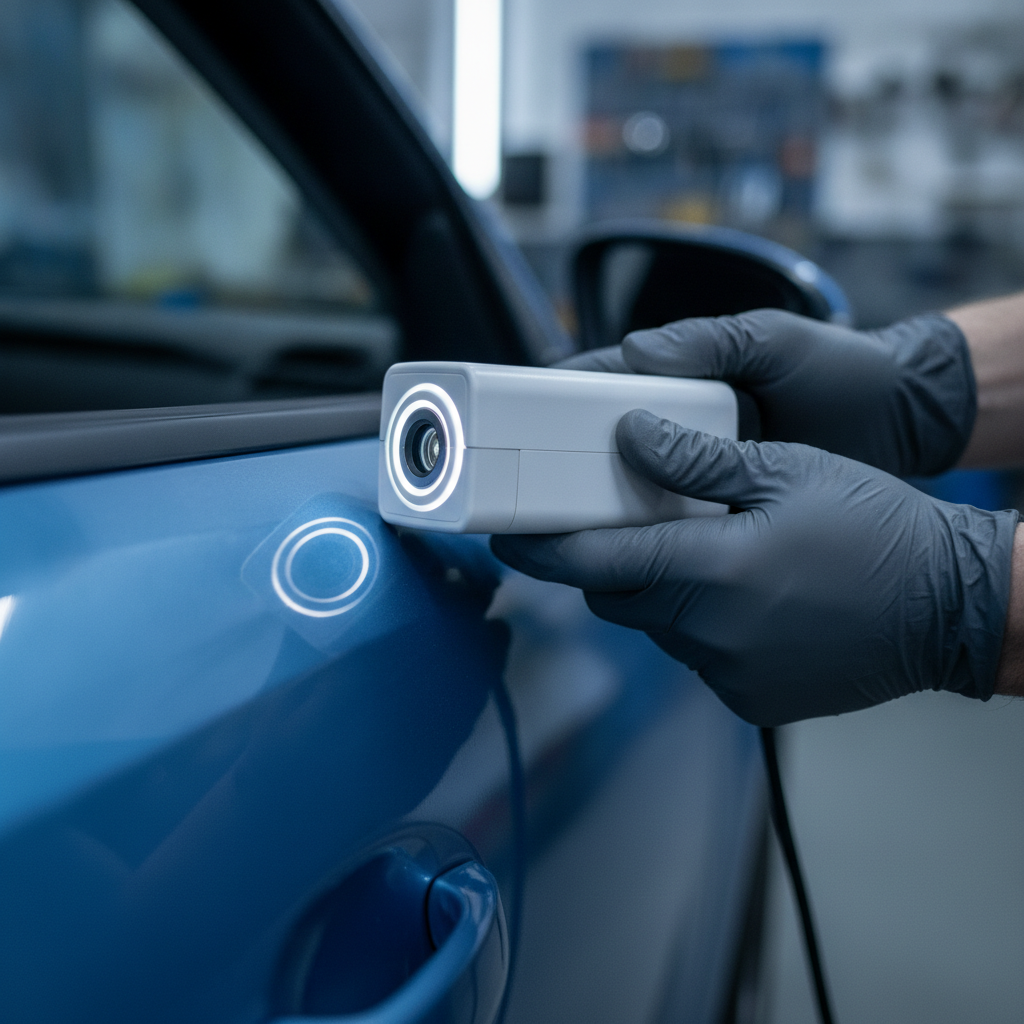
Step-by-step workflow
- Assess: Read OEM code; inspect fade and prior polishing; spectro‑scan near the repair.
- Variant test: Mix suggested variants in a pro system (e.g., Envirobase/Glasurit) and spray test cards.
- Compare: Judge cards at 0°/45°/90° under LEDs and outdoors; pick the closest hue/value/flop.
- Prep: Repair, feather, prime, and sand to a uniform surface; panel and neighbor masked for a planned blend.
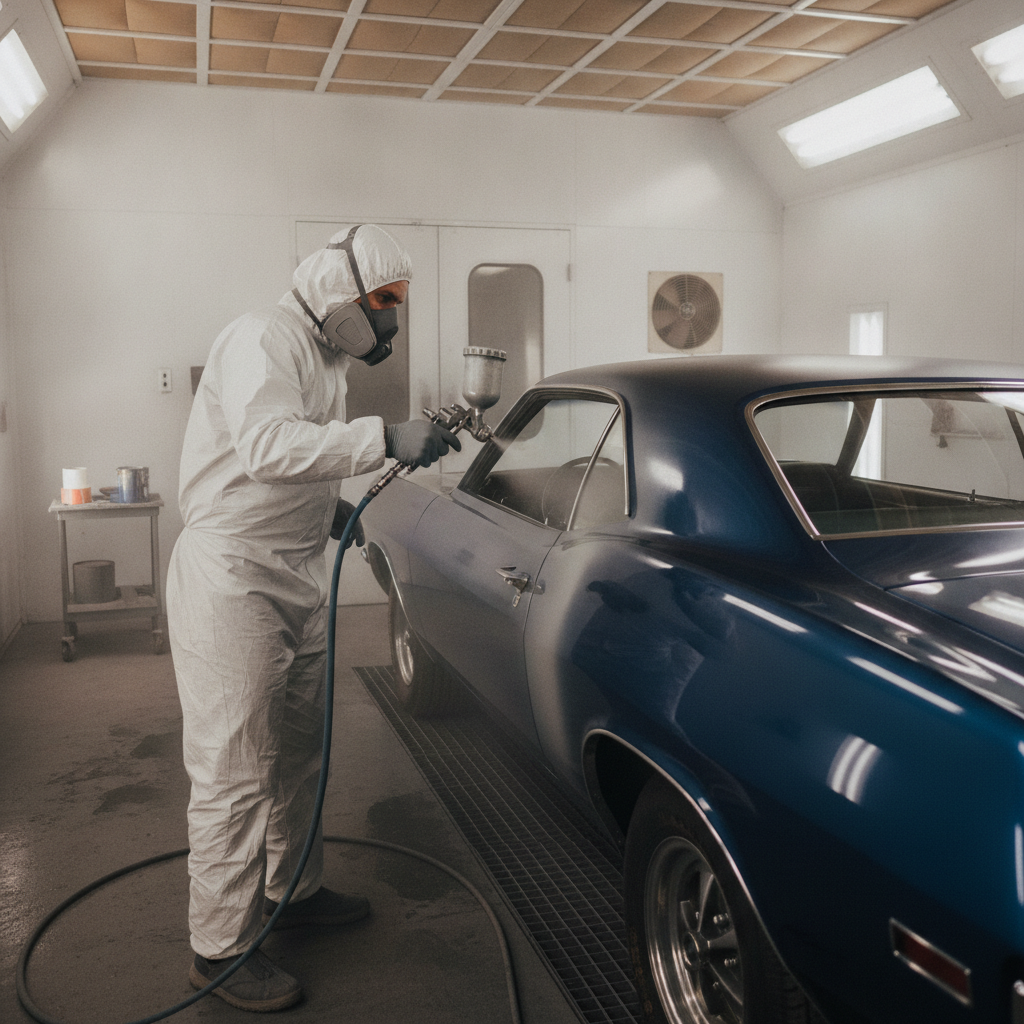
- Basecoat: Light, even passes; adjust fan/overlap. Typical HVLP gun pressures are product‑specific—follow TDS.
- Blend: Taper color 6–12 inches into the neighbor; clear the full panel to equalize gloss/texture.
- Cure: Honor flash windows; bake per spec (often ~140°F/60°C for 20–30 minutes).
- Finish: De‑nib if needed and polish to match OEM peel and gloss.
| Checkpoint | Why it matters |
|---|---|
| Test cards outdoors | Confirms hue/value/flop where you’ll actually see the car |
| Blend into neighbor | Hides the transition so the eye can’t find an edge |
| Texture match | Keeps OEM orange peel consistent across panels |
Collision impacts that need refinishing often nudge alignment out of spec or bruise tires and brakes. Because we handle wheel alignment and brake replacement in‑house, we can correct those safety items in the same visit—no second appointment or uneven tire wear surprise later.
What to Ask Your Burnaby Body Shop Before They Paint (And Red Flags)
Ask how they choose variants, whether they spray test cards and check outdoors, how far they blend, and how they match texture. If they say “the color code is enough” or refuse to blend metallics, that’s a red flag—keep looking.
- “How do you pick the variant?” Good: spectro + sprayed test cards judged outside. Red flag: “The code is fine.”
- “Where will you blend?” Good: 6–12 inches into a neighbor, ending at a body line. Red flag: “We’ll stop at the repair edge.”
- “Do you check in sun and shade?” Good: Multi‑light verification. Red flag: “Shop lights only.”
- “How do you match texture?” Good: Finish‑sand/polish to OEM peel. Red flag: “Clear is clear; texture doesn’t matter.”
- “Can you handle related issues?” Good: Alignment, A/C, tires/brakes coordinated at one stop like our shop.
How to Judge the Result — and When to Push Back
Step back 8–10 feet and walk the car in daylight and open shade. There should be no halo at the repair edge, no hue shift at angles, and texture should feel consistent. If something pops, ask for a re‑blend or texture correction before you sign.
Pickup can be stressful. You step outside, glance at the B‑pillar, and your eye goes straight to the repair. We schedule hand‑offs so we can walk the car with you—outside if possible—because that two‑minute check is the difference between “I think it’s fine” and “I love it.”
- Angles: Look head‑on and then along the panel. Metallics shift at 30° vs. 90°.
- Edges: A faint ring or darker stripe near the repair suggests weak blending.
- Texture: Run fingertips lightly—OEM peel should feel consistent panel to panel.
- Gloss: Uneven gloss can be a bake or polish issue; easy to correct when caught now.
If you’re unsure, pause pickup. We’d rather adjust the blend than have you live with a mismatch.
Local Tip: Paint Matching in Burnaby’s Climate
Burnaby’s wet winters and bright summer days speed oxidation and change how colors read. Matching to your car’s current finish, blending neighbors, and checking outside make the repair hold up in real weather—not just under booth lights.
Cloud cover can swing within minutes near transit corridors. We’re used to verifying under both outdoor shade and direct sun when available. For a simple explainer on how light affects perceived color (even for house paint), this guide on choosing paint colors breaks down light and hue in everyday terms. And for local context on sheen and weather, see this Burnaby overview.
FAQ
Most questions focus on how exact the match can be, whether blending is required, and how to care for fresh paint. Here are direct answers from our Burnaby team.
Can a body shop match my car’s paint exactly?
With a measured variant, proper blending, and multi‑light checks, the match is visually seamless in everyday viewing. We scan your current finish, choose the right formula in a pro system, blend 6–12 inches into neighbors, and confirm outdoors before delivery.
Why doesn’t my new bumper match my fender?
Bumpers are plastic, fenders are metal—materials reflect metallics differently. If color, texture, and gloss aren’t tuned together, the bumper can read lighter/darker at angles. Strategic blending and texture matching solve this.
Do you always need to blend into other panels?
For metallics and pearls, almost always. Blending hides the transition so the eye can’t find an edge. Solid colors sometimes allow panel‑only work, but we’ll recommend what keeps the repair invisible long‑term.
How should I care for fresh paint after pickup?
Hand‑wash with a pH‑neutral soap and soft mitt, avoid harsh chemicals, and hold off on waxes/coatings until the finish has fully cured. We’ll give you simple aftercare notes at hand‑off.
Key takeaways
- Factory codes are a starting point; your car’s current finish is the target.
- Measurement + variant + 6–12 inch blends + outdoor checks = invisible repair.
- Burnaby weather accelerates fade; match to today’s color, not day‑one.
- One‑stop collision plus alignment/tires/brakes saves time and prevents rework.
Need help after a fender‑bender or unhappy with a past repair? Start with a free estimate. As an ICBC Platinum Partner, A1 Buller Auto Collision coordinates claims and repairs—and we can align, refinish, and road‑test in one visit.